
Microchip PIC18F4520 Microcontroller Architecture and Application Development
The Microchip PIC18F4520 stands as a prominent member of the PIC18F family, renowned for its robust architecture and versatility in embedded systems design. This 8-bit microcontroller, built around an enhanced RISC core, offers a compelling blend of performance, memory, and integrated peripherals, making it a cornerstone for countless industrial, automotive, and consumer applications.
At the heart of the PIC18F4520 lies its Harvard architecture, which features separate buses for instructions and data. This design allows for concurrent access to program and data memory, significantly enhancing throughput and performance. The core operates at speeds up to 40 MHz, executing most instructions in a single clock cycle, which facilitates efficient and rapid processing for real-time control tasks.
A critical component of its architecture is the memory organization. The device boasts 32 KB of Flash program memory, which is electrically erasable and reprogrammable, enabling extensive and flexible code development. It is complemented by 1.5 KB of RAM for data storage and 256 bytes of EEPROM for retaining critical data even after a power cycle. This memory structure supports complex program execution and data handling.
The peripheral set integrated into the PIC18F4520 is extensive and designed for connectivity and control. It includes multiple communication interfaces: USART, SPI, and I2C modules for serial data exchange with peripherals like sensors, displays, and other microcontrollers. For analog signal processing, it features a 10-bit Analog-to-Digital Converter (ADC) with up to 13 channels, allowing precise measurement of analog inputs. Furthermore, it includes Capture/Compare/PWM (CCP) modules and timers, which are essential for generating precise waveforms, measuring time intervals, and controlling motor speeds.
Application development for the PIC18F4520 typically involves using the MPLAB X Integrated Development Environment (IDE) with either the XC8 compiler for C code or assembly language. The process begins with hardware design, incorporating the necessary power supply, clock circuit (using a crystal oscillator or internal oscillator), and reset circuitry. Developers then leverage the microcontroller's peripherals through register configuration. For instance, setting up a UART for serial communication involves configuring the baud rate generator and enabling the transmitter and receiver.
A practical application example is the design of a smart temperature control system. In such a system, the PIC18F4520's ADC reads voltage from a temperature sensor like an LM35. The converted digital value is processed, and based on the programmed logic, the microcontroller can generate a PWM signal to control a fan's speed via a motor driver circuit. Simultaneously, it can display the current temperature on an LCD using its parallel I/O ports and log data to an external EEPROM using the I2C protocol. This exemplifies the microcontroller's ability to handle multiple tasks—analog sensing, digital processing, and peripheral control—simultaneously.
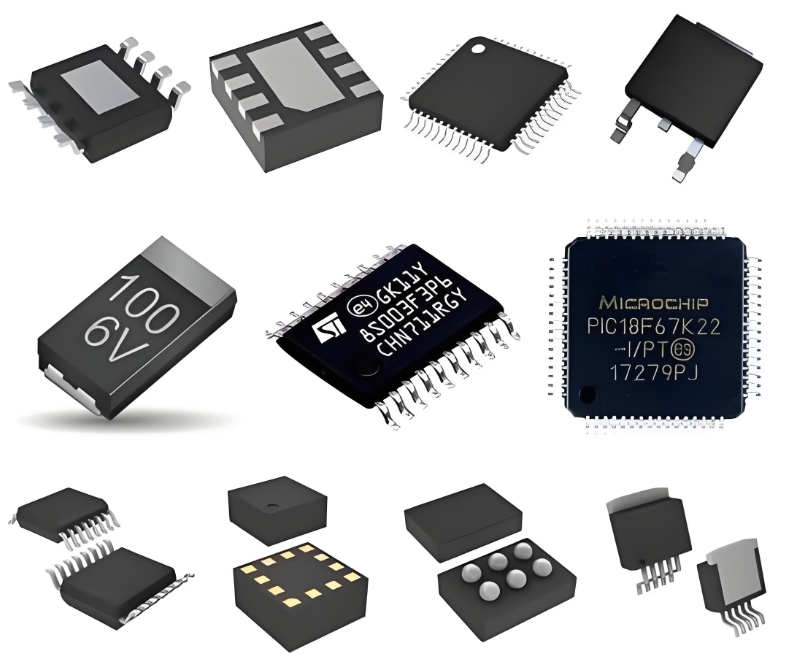
Debugging and programming are streamlined through the In-Circuit Serial Programming (ICSP) interface, allowing firmware to be uploaded and tested without removing the chip from the circuit board.
ICGOODFIND: The PIC18F4520 remains a highly capable and widely adopted microcontroller. Its balanced architecture, combining a high-performance CPU, substantial memory, and a rich set of integrated peripherals, provides a solid foundation for developing sophisticated embedded applications. While newer 16-bit and 32-bit MCUs offer higher performance, the PIC18F4520's ease of use, extensive documentation, and proven reliability ensure its continued relevance in the embedded world, particularly for mid-range complexity projects requiring robust control and connectivity.
Keywords:
1. Harvard Architecture
2. Integrated Peripherals
3. Application Development
4. In-Circuit Serial Programming (ICSP)
5. Embedded Systems

